
Teras AI · Integration
Agents that do the work, wired into what you run.
Not a tool your team has to remember to open. The repetitive part of the process, handled — and it keeps going when nobody is at a desk.
Start a conversationHold anywhere to turn up the light
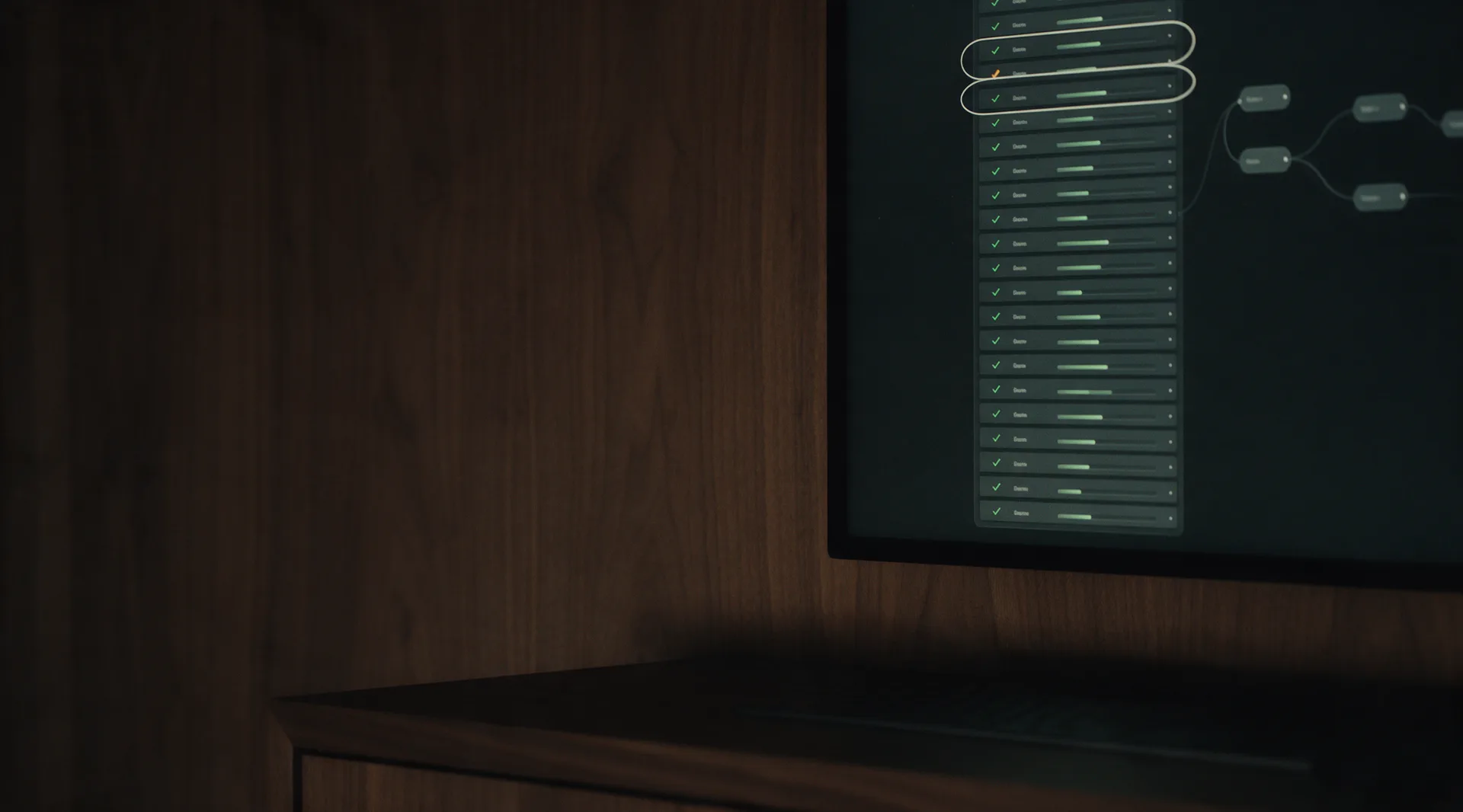
Nobody is in the building. The work is still going.
AI Integration
The work carries on when you don't.
An assistant you have to prompt is still work. An agent that already knows the job is not. The difference is whether the thing runs on its own, against your real systems, on a schedule or a trigger nobody has to remember.
So that is what we build: the handoffs nobody enjoys, the check somebody has to remember, the report that gets written every Monday. Connected to the tools you already have, and running whether the office is full or empty.
Four ways in.
Most of it starts with one process nobody wants to own.
-
01
Agents that do the work
Not a chat window. Something that takes a job end to end and reports back when it is done.
- Started by an event, a schedule or a message, not by someone remembering
- It reads, decides, acts, and leaves a trail you can check
- It hands back to a person at the points where a person should decide
-
02
Agentic workflows
The repetitive stretch between two systems that somebody currently does by hand.
- Intake, sorting, drafting, filing, chasing — the parts with no judgement in them
- Runs on your schedule and says when something needs a human
- Built so you can see what it did, not only that it ran
-
03
Connected to your systems
Your tools, your data, your stack. Nothing has to move somewhere new for this to work.
- Wired into what you already have and already know
- Your own documents and history, so answers come from your context
- No migration, and no second place to keep up to date
-
04
Local and private when it matters
Where the data cannot leave, the whole thing runs on hardware you own.
- Models on your own machines, inside your own network
- For the work where sending it out is not an option
- Same agents, same workflows, different address
How it works.
Three steps, and the first one is a conversation.
Step 01
We find the process
Usually the one people complain about. We walk it with you, start to finish, exactly as it happens now.
Step 02
We build it
Wired into your systems, with the handoffs to a person kept where judgement is actually needed.
Step 03
It runs
On a schedule or a trigger, with a record of what it did. You check it because you want to, not because you have to.
Tell us what you're working on.
We'll take it from there. No technical knowledge needed, no commitment, just a conversation about the work you already do.
Start a conversation